Tumblr user marx-brothers-archive (Leah) has a serious issue
with reposting and failing to give credit. Interestingly, she credits most
people in the Marx Brothers Council of Facebook, but many of us who are both on tumblr and in the Council
have noticed some trends:
For a while last April, Leah seemed to be imitating certain people in the Council, trying to attach names, dates and facts to images she posted there, as though she wanted them to notice her. She would repost images from the Council to her tumblr and credit the Council members. Usually. There are instances of her not doing this (meaning she did not put a permalink in, put credit in the tags or any other accepted form of crediting original posters).
HOWEVER
From day one she would repost things from tumblr in the group, usually from hazelfyre and marx-bros-place but would not credit them, instead acting as though their screencaps of the Marx Brothers and text posts about them were her own content and ideas. When people who were both in the Council and on tumblr would politely add credit to these posts, Leah would delete the entire thing so nobody would know she was blatantly stealing from other Marx Brothers fans. She also began blocking anyone who added credit to her posts.
Recently she has started this again with tutsiefruitsie, and continues to repost their screencaps and edits in the Council and tumblr, even after being blocked by them and asked to stop (screencapped evidence can be seen in a post they made here). Perhaps Leah is trying to figure out who is in the Council by reposting their things in order to get them to credit themselves so she can stalk and harass them as she’s done to hazel, or at the very least block them too, so she can continue to repost their work as her own and deceive members of the Council into thinking she’s this huge Marx fan with original ideas.
On top of all this, Leah demands people credit her for photos that she claims belong to her, yet refuses to credit someone if she believes doing so will not benefit her (such as trying to get someone to like her by sharing their things properly) or will be detrimental to her receiving praise and attention from people who don’t know any better.
It’s wrong and needs to stop. It’s sickening as this is not the whole story, and is minor compared to many other actions she has done to people in this fandom. Everyone from tumblr and the Council knows she does this. We all see it every time it happens. There’s no reason for Leah to continue to do this. The jig is up.
People ask me all the time, “HOW DO I COME OUT!?” so to make it easy for everyone, I made this video! Just send your loved ones this and the song will do the work for you! Enjoy!
OMG! This is wonderful! Please share as much as you can ^__^
I’m just going to leave this here in case any of you want to use it 🙂
you know what i need in life? open minded friends on similar wavelengths, people to transition and grow with mentally. to learn with to learn from. intellectual stimulus.
Looking at the American Film Institute’s Top 100 films of the past 100 years, the first sound film on the list, King Kong premiered Apr 7, 1933. The Jazz Singer was the first feature film to incorporate sound in 1927, but by AFI’s standards, the first great American talkie was six years in the making. It didn’t take Alfred Hitchcock nearly that long.
England’s Alfred Hitchcock made the first great sound feature, Blackmail, premiering in London on June 30, 1929. Of course it cannot rank with Hitchcock’s later masterpieces, but Blackmail contains sequences that illustrate even then, Hitch was the master of suspense. By 1930, three more great sound films were made in Europe: Germany’s The Blue Angel (Joseph von Sternberg with Marlene Dietrich) and M (Fritz Lang), and France’s L’Age D’Or (Luis Bunuel).
AFI’s list is limited to only 100 great films, but there are certainly great American films in the first 6 years of talkies. The first great American sound film is Rouben Mamoulian’s Applause, premiering Oct 7, 1929, and coincidentally, the day after Hitchcock’s Blackmail premiered in America. Rouben is very much America’s first sound innovator. While many early American sound films feature an immovable camera and stilted acting, Rouben’s camera moved right along with the action, not only in the studio, but in numerous outdoor locations in and around New York City, all that with some of the chubbiest chorus girls ever to hit Broadway.
Two early sound westerns also feature outdoor photography. The Virginian (1929), the first great sound western, was directed by Victor Fleming, starring Gary Cooper and Walter Huston. Then in 1930, John Wayne starred in Raoul Walsh’s The Big Trail, filmed in an early widescreen process that proved to be a box office failure, leading to an absence of any big budget westerns until the late 30’s, and John Wayne’s big budget return in John Ford’s Stagecoach (1939).
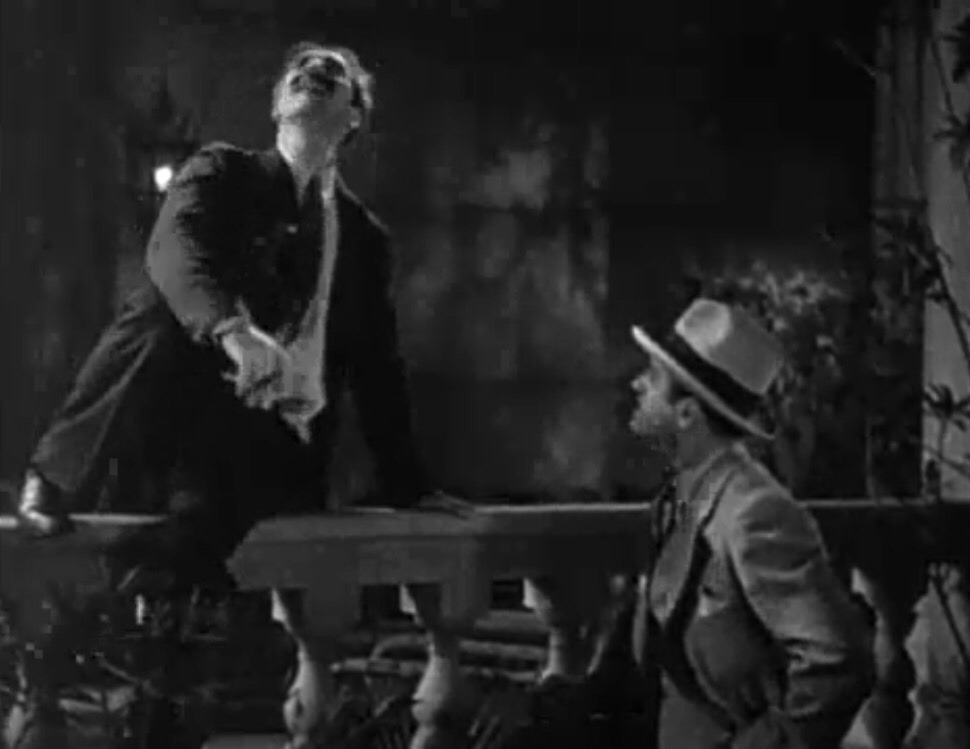
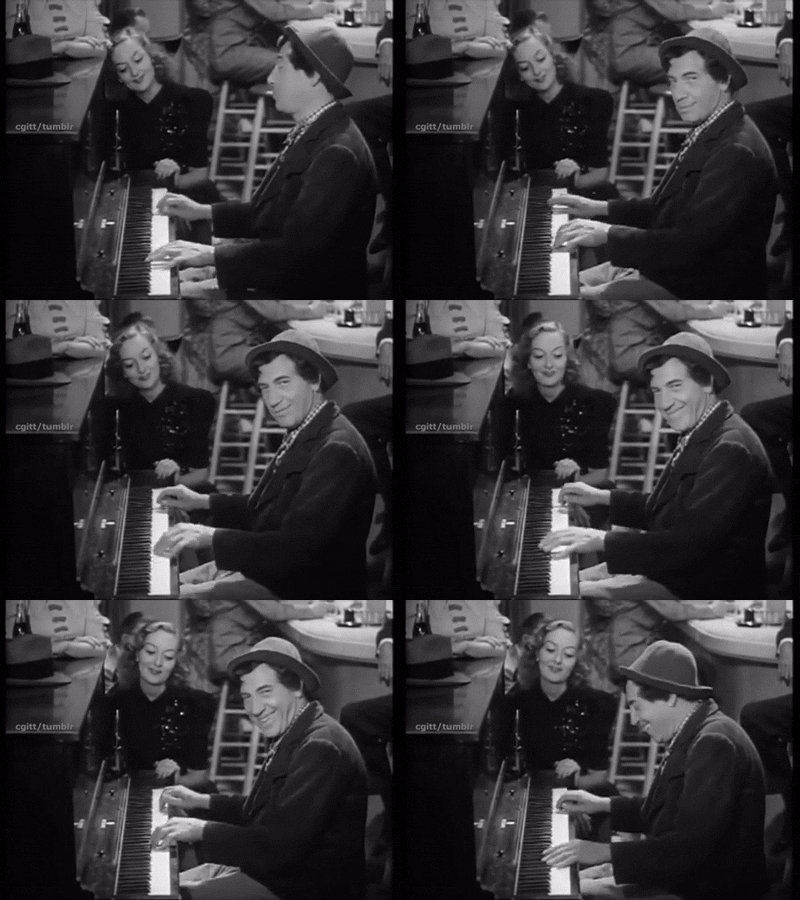
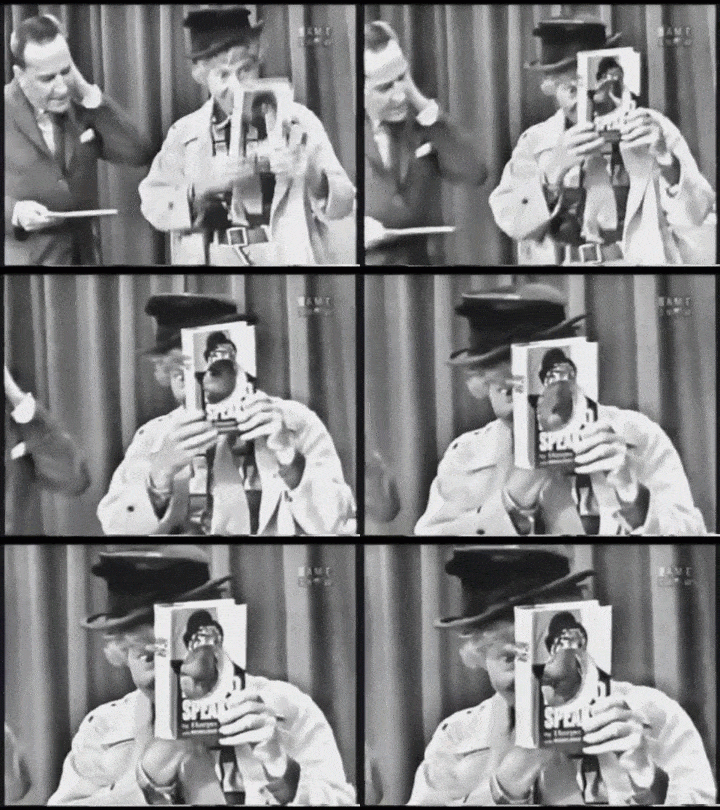
The first great sound comedy on AFI’s list is The Marx Brothers’ Duck Soup, released late in 1933, but the brothers started making great comedies with Animal Crackers (1930) and Horse Feathers (1932). Ben Hecht wrote his first great comedy, The Front Page, in 1930, Laurel and Hardy’s first great feature was Pardon Us (1931), and Ernst Lubitsch made the sophisticated comedy Trouble in Paradise in 1932.
Before King Kong, AFI could also have cited Frankenstein (1931), The Mummy (1932), and The Most Dangerous Game (1932). The great gangster trio, Little Caesar, Public Enemy and Scarface (1931-32) are all absent from AFI’s list. Warner Brothers also made a series of social dramas in the early 30’s, the best being 20,000 Years in Sing Sing (Spencer Tracy and Bette Davis 1932) and I Am a Fugitive From a Chain Gang (Paul Muni 1932). In addition to Scarface, Howard Hawks also made the first sound film to win an Oscar for its story, the unsentimental The Dawn Patrol (1930).
Many great films at the dawn of the sound era 1929-1932 have just been mentioned. The AFI cites only one film for this time period, Charlie Chaplin’s silent City Lights (1931), claiming it is the 11th best American film of all time! Even in 1936 Chaplin was still making silent films when everyone in Hollywood had moved on. AFI also chooses to recognize his silent Modern Times at number 78. Chaplin did not make his first sound film until 1940.



 Migratory Cocoanuts